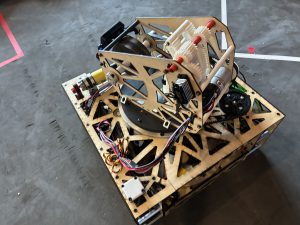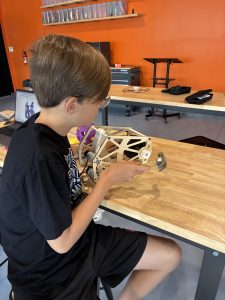
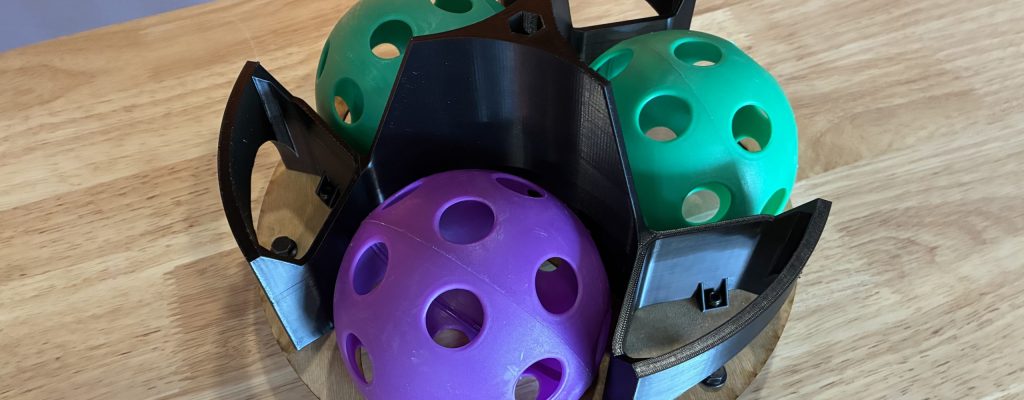
3D printing has become one of the most powerful tools in modern robotics. From custom brackets and sensor mounts to drivetrain components and enclosures, being able to design and manufacture parts on demand gives teams incredible flexibility. However, printing functional parts—pieces that must survive stress, vibration, and repeated use—is very different from printing decorative models.
Below are key principles to help you create stronger, lighter, and more reliable 3D printed parts for robotics applications.
Start with a Good Design
A strong print starts long before you hit the “Print” button. Good design habits can dramatically improve part strength and reliability.
- Avoid sharp corners whenever possible. Fillets and chamfers reduce stress concentrations and make parts more durable.
- Design for thickness, not just shape. Thin walls may look fine on screen but can crack under load.
- Reinforce high-stress areas like bolt holes, shafts, and mounting points with extra material.
- Use standard hardware sizes so your parts integrate cleanly with existing robotics components.
Designing with real-world forces in mind—torque, vibration, impact—will save time and filament later.
Picking the Right Filament
Not all filament is created equal, especially when it comes to robotics.
- PLA is easy to print and great for prototypes, but it can deform under heat and stress.
- PETG offers better flexibility and durability while remaining beginner-friendly.
- ABS is tougher and heat-resistant but requires careful printing conditions.
- Nylon and carbon-fiber blends provide excellent strength-to-weight ratios for competition robots but require more advanced printers.
Choosing the right filament depends on how the part will be used—structural load, temperature exposure, or repeated movement.
Slicer Settings – Strength vs. Weight
Your slicer settings play a huge role in determining how a part performs.
- Infill percentage controls internal strength. Higher infill adds strength but also weight and print time.
- Infill patterns like gyroid or cubic often provide better strength than simple grid patterns.
- Wall thickness is often more important than infill. Extra perimeters can significantly increase durability.
- Layer height affects bonding; slightly thicker layers can sometimes improve layer adhesion for functional parts.
Balancing strength and weight is especially important in robotics, where excess mass can reduce performance.
Print Orientation Matters
One of the most overlooked factors in 3D printing is orientation.
- Parts are strongest along the layer lines, not across them.
- Load-bearing forces should be aligned with the strongest print direction whenever possible.
- Bolt holes printed vertically are usually stronger than those printed horizontally.
- Reorienting a part can dramatically improve durability without changing material or settings.
Always think about how forces will travel through the printed layers once the part is installed.
Testing Your Part
Testing is where theory meets reality.
- Test fit parts before final assembly to catch tolerance issues.
- Apply real-world stress—pull, twist, or load the part as it would be used on the robot.
- Iterate quickly by adjusting design, orientation, or settings based on failures.
- Encourage students to learn from breakage, not fear it. A broken part often teaches more than a perfect one.
3D printing allows rapid iteration, making it ideal for learning engineering principles through experimentation.
Final Thoughts
3D printing functional parts for robotics is a blend of design, material science, and hands-on testing. When done correctly, it empowers students and teams to solve problems creatively and build custom solutions that simply aren’t possible with off-the-shelf components.
With thoughtful design choices and a willingness to test and improve, 3D printing becomes more than a tool—it becomes a core engineering skill.